What I Would Teach A First-Time CTO In 90 Days

The first-time CTO usually does not fail because they cannot write code or understand systems. They fail because every problem arrives wearing the same badge: urgent.
A customer escalation, a senior engineer quitting, a cloud bill spike, a broken hiring loop, a board question about AI, a founder asking for a platform rewrite, a security questionnaire, and a roadmap fight can all arrive in the same week. The role is not to touch everything. The role is to build judgment about what deserves attention now.
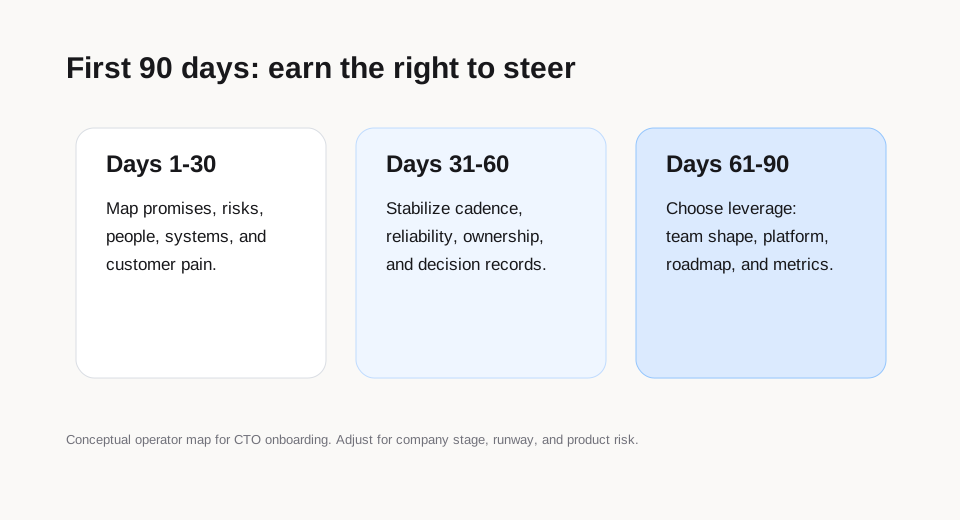
Days 1-30: Listen Until The System Becomes Visible
In the first month, I would teach the CTO to resist hero mode. Do not announce a new platform strategy on day five. Do not rewrite the architecture because the diagram looks sad. Do not accept every inherited complaint as truth.
Map the promises first. What has the company promised customers, sales, investors, regulators, and employees? Then map the risks behind those promises. Where is reliability thin? Where is delivery blocked? Where is data quality weak? Which people carry too much context? Which systems are quietly mission-critical? Which roadmap bets assume technical capacity that does not exist?
This month is for building a fact base. Read incidents. Sit in customer calls. Review the deployment path. Ask engineers what they are afraid to change. Ask product what engineering always says no to. Ask support which issues keep returning. Ask finance where infrastructure cost surprises them.
Days 31-60: Stabilize The Operating Cadence
The second month is where the CTO should turn observations into operating rhythm. Not a heavy process. A rhythm.
Pick the small set of mechanisms that makes the company easier to steer: a weekly technology risk review, a clean incident review habit, a visible architecture decision record, a delivery-health dashboard, a security review path, and a roadmap conversation where technical risk is allowed to sit next to revenue.
Google SRE's SLO and error-budget language is useful here even if the company does not use formal SRE yet. It teaches an important executive lesson: reliability is a product promise, not an engineering mood. The CTO needs a way to discuss risk with product and business leaders without turning every conversation into uptime absolutism.
This is also the time to make ownership explicit. Who owns release quality? Who owns cloud cost? Who owns data quality? Who owns AI evaluation? Who owns security exceptions? If the answer is "engineering," the answer is not precise enough.
Days 61-90: Choose Leverage
By the third month, the CTO should have earned enough context to make sharper choices. The question becomes: which few changes will create the most option value?
Sometimes the leverage is architecture: simplify a fragile integration layer, retire a service nobody can operate, or create a platform boundary. Sometimes it is people: hire a staff engineer, split an overloaded team, promote an engineering manager, or move a trusted operator closer to product. Sometimes it is metrics: stop measuring activity and start measuring customer-impacting flow, reliability, and support load.
For AI-heavy companies, the third month should include a real AI posture review. What data is used? What is evaluated? What is monitored? What can the system do? Where can it fail? What is the cost per successful task? NIST's AI RMF and GenAI Profile are useful not because a first-time CTO should become a standards librarian, but because they make risk visible.
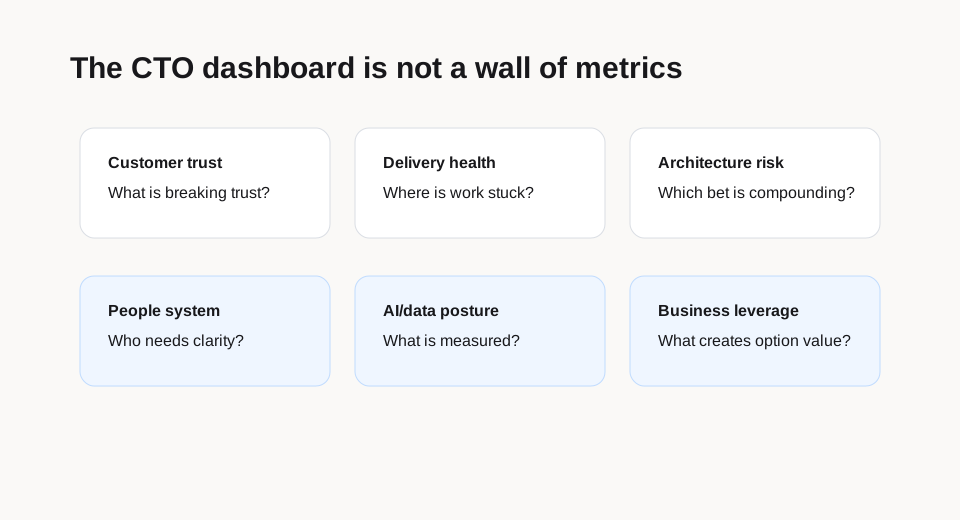
The Teaching I Would Repeat
Your job is not to be the smartest engineer in the room. It is to make the room smarter about the business consequences of technical choices.
That means translating architecture into options, reliability into trust, delivery into learning speed, security into sales confidence, AI governance into product credibility, and engineering culture into execution quality.
A first-time CTO does not need to solve everything in 90 days. They need to make the system visible, stabilize the operating cadence, and choose the few moves that make the company easier to lead.